Draw To Smash - Draw Puzzle
- 4.7
- Rating
- 50.00M
- Installs
- Free
- Price
 Analysis by App-foxy
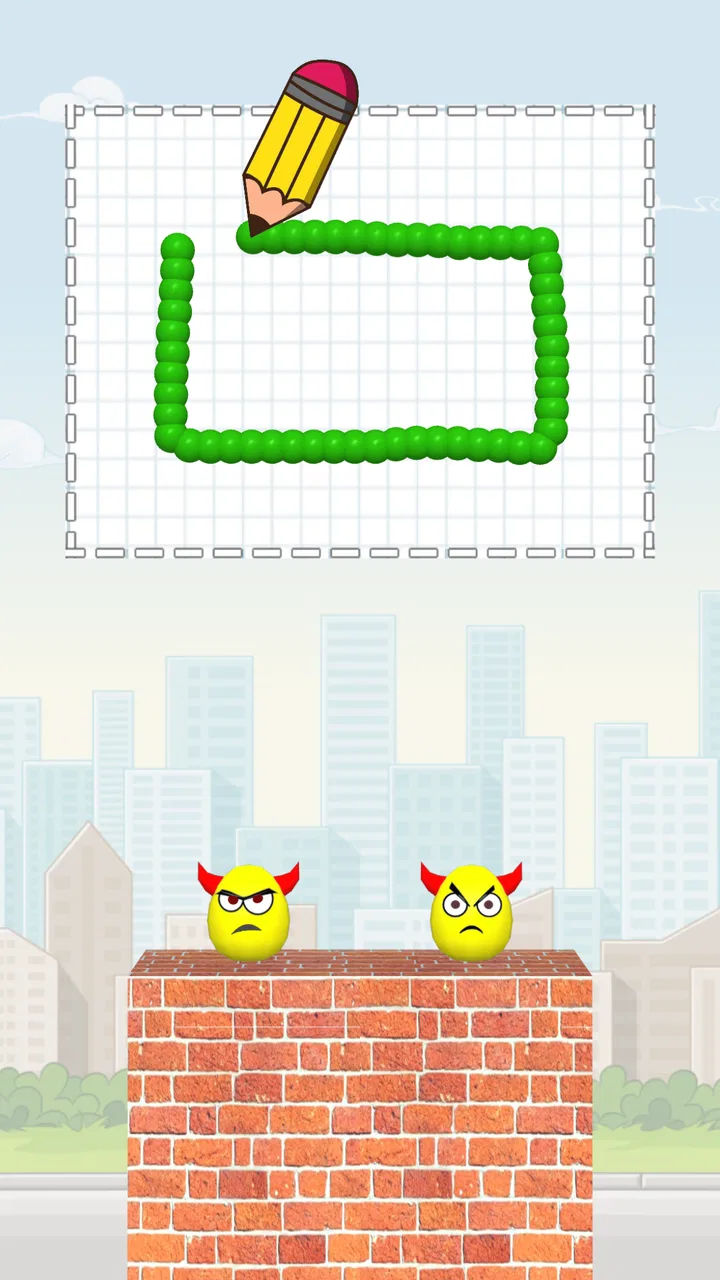
I expected a quick arcade distraction from Draw To Smash, but its simple idea has more depth than the short store description suggests. I draw a line or shape on the screen, release it, and watch physics decide whether my construction can reach the obstacles in its path. Sometimes the answer is obvious; more often, the satisfying part is finding a shape that uses less movement, avoids a bad angle, or turns a small drawing into a surprisingly effective solution.
That makes it a good fit for short sessions rather than a game I need to schedule time for. I can play while waiting for a coffee, take on a few puzzles before bed, or return to it when I want something interactive without a complicated story or a long tutorial. The important question, though, is whether that first-week curiosity survives after the novelty of drawing solutions wears off. My experience is that the game earns regular space for players who enjoy experimenting with physics, but it is less convincing for anyone looking for a deep arcade system or a constantly changing challenge.
How the drawing puzzles feel during the first week
The opening appeal comes from the immediate connection between an idea and an action. I do not select a character, study a large control scheme, or wait through a long explanation. I draw directly, then see whether the shape behaves as expected. That short loop makes the game easy to understand while still leaving room for mistakes. A failed attempt usually feels like information rather than a complete waste of time: I can see whether my line was too short, too heavy in the wrong place, or simply aimed at the wrong part of the obstacle.
You May Also Like

 Blood Strike: 2.5 Anniversary
Blood Strike’s Loadouts Turn Every Drop Into a Tactical Gamble
A close look at Blood Strike’s custom loadouts: how fast access to signature weapons reshapes its battle royale rhythm, rewards preparation, and narrows the gap between fights.

 Pandora - Music & Podcasts
Pandora’s Music Is Easy to Start, but Harder to Recover
Pandora’s strength is its low-effort path from a seed to a station. Its weak spot is how much confidence it asks you to place in connection, setup, and quiet recovery.

 8 Ball Pool
 Is Built on Rivalries, Rematches, and Routine
A close look at the rivalries, rematches, shared routines, and unanswered safety questions that turn a quick pool match into a persistent mobile community.

 Samsung Music
’s Quiet Strength Is Playing What You Already Own
Its reach comes less from spectacle than from dependable access to a personal library. That simplicity is both the app’s strongest retention engine and its ceiling.

 AccuWeather: Weather Radar
AccuWeather Review: A Quick, Clear Forecast for Everyday Decisions
For everyday plans, the best forecast is the one you can understand quickly. AccuWeather makes rain timing, radar, and local conditions easy to act on, with a few trade-offs.

 Hill Climb Racing
Why Hill Climb Racing Still Turns Crashes Into One More Run
A tiny car, a bumpy hill and one more upgrade: Hill Climb Racing keeps resurfacing because its simple chaos makes every near-miss feel personal.
More From Our News Desk



What I like most is that the game rewards visual thinking. I often begin by looking at the arrangement rather than rushing to draw. A compact shape may be more useful than a long stroke because it can make contact from a better angle. In other moments, a simple line works, but only if I place it where the resulting movement has enough room to develop. That small pause before drawing is where the arcade format becomes a puzzle instead of a reflex test.
The controls are approachable for casual players, including younger users who want something they can understand without reading a manual. Its content rating is Everyone, and that matches the uncomplicated presentation and non-technical input. I would still encourage children to play with an adult’s usual awareness of screen time, but there is no intimidating learning curve here. The developer, HYPERCELL, has built the experience around a gesture that feels natural on a phone.
During my first sessions, I found myself trying deliberately imperfect solutions. Drawing a perfect-looking line is not always the goal; sometimes a slightly awkward shape creates the contact needed to clear the scene. That is a useful lesson because it stops the game from becoming a drawing contest. The screen does not judge artistic quality. It judges whether the physics of the drawing produces the intended result.
The free price removes the biggest barrier to trying it. The game has reached more than 50 million installs and holds a 4.7 average from roughly 179 thousand ratings, which suggests that its basic loop connects with a broad audience. Those figures are not a guarantee that every puzzle will suit every player, but they do fit my impression of a game that is easy to pick up and immediately understandable.
A realistic everyday use case is a short commute with unreliable attention. I can start a puzzle, make an attempt, and stop without losing the thread of a story or needing to remember a complicated objective. It also works well as a mental reset between tasks. When I am tired, I can focus on one visual problem at a time instead of opening a competitive game that expects fast reactions or a long uninterrupted match.
Why the physics creates satisfying small victories
The best moments come from watching a solution unfold in stages. My drawing may touch one obstacle, shift its position, and then create the opening needed for another part of the scene. That chain makes a successful attempt feel earned even when the drawing itself looks crude. I enjoy the contrast between the calm act of sketching and the sudden movement that follows.
There is also a useful distinction between a solution that works and a solution that feels elegant. Early on, I am happy just to clear a puzzle. After becoming familiar with the interaction, I start looking for cleaner drawings and more reliable placements. That gives the first week a natural progression: first I learn what the physics will tolerate, then I begin making decisions with more confidence.
One tip that helped me was to watch the empty space around the obstacles, not just the obstacles themselves. A drawing can succeed because of where it lands after contact, and a crowded-looking area may offer less room for movement than it first appears. I also learned to avoid adding unnecessary length. Extra material can make a construction less predictable, especially when a smaller shape would already reach the target.
The game is forgiving enough to invite experimentation, but that same accessibility can reduce tension for experienced puzzle players. If you prefer strict timing, complicated chains, or a system that demands repeated mastery of one precise technique, the early stages may feel too gentle. For me, that is acceptable in a casual arcade title, but it is an important expectation to set before installing it.
What remains after the novelty fades
I find the lasting appeal depends less on how many puzzles I clear than on whether I enjoy treating each drawing as a small experiment. A useful way to keep that experiment fresh is to change just one thing after a miss—its length, placement, or angle—so I can tell what affected the outcome. That makes it easier to judge whether the game’s familiar loop still feels rewarding or whether I’m ready for a different kind of arcade challenge.
Month-to-month value depends on your relationship with repetition
The longer-term value is not based on a large narrative or a character-building system. It comes from the steady pleasure of solving another visual setup and seeing how the physics responds. That makes the game easy to revisit, but it also means the experience depends heavily on whether you enjoy the core gesture. If drawing, testing, and adjusting already sounds appealing, the lack of extra layers is a strength. If you need a strong sense of progression, it may feel thin after the first burst of discovery.
I would describe it as a game for recurring small sessions rather than a permanent daily habit for everyone. I can imagine opening it several times in a month when I want a low-pressure puzzle, particularly because each attempt is self-contained. I am less likely to spend a long evening with it, since the central action remains familiar and the game does not replace a more substantial arcade challenge when I want variety.
The current version is 1.29.0, and the game supports Android 7.0 or later. That makes it accessible on a wide range of Android devices, including older phones that may not be suitable for demanding modern games. In practical terms, the modest concept is part of its appeal: I do not need a flagship device or a large block of free time to get something from it.
For iPhone and iPad users, the same basic appeal applies: direct touch interaction, quick attempts, and a visual challenge that does not require a controller. I would choose it over a traditional arcade game when I want to think before acting. I would choose a more conventional action title when I want speed, score chasing, or a stronger sense of personal performance.
Compared with match-three games, this feels less dependent on pattern clearing and more dependent on spatial prediction. Compared with endless runners, it asks for planning instead of constant reaction. Compared with drawing apps, it gives the sketch a clear purpose and immediate physical consequence. Those comparisons explain its particular niche: it is not trying to be an art tool, a reflex game, or a long-form puzzle adventure. It sits between them, using drawing as the input for compact physics problems.
There is a practical trade-off in that design. Because the input is so open-ended, I can sometimes solve a situation in a way that feels more like exploiting the physics than understanding the intended arrangement. That can be funny and rewarding, but it may also weaken the satisfaction for players who want every puzzle to have one carefully authored answer. I prefer treating those unexpected solutions as part of the game’s personality rather than as a flaw, provided I am in the mood for experimentation.
The maintenance burden is pleasantly low, but not invisible
One reason I keep returning is that the game asks very little from me outside the puzzle itself. I do not need to maintain a complex collection, remember a build, or learn a changing set of abilities. The mental preparation is simply to inspect the screen and decide where to draw. That low maintenance makes it useful for people who want a game that can sit untouched for days without becoming difficult to resume.
The downside is that low maintenance can become low attachment. There is no personal strategy to preserve between sessions, so returning after a break feels almost exactly like starting another casual round. That is convenient, but it does not create the same pull as a game with long-term goals, evolving tactics, or a world I want to revisit.
I also recommend keeping expectations realistic about the free format. The price makes trying it easy, but free mobile games can include interruptions or design choices intended to support continued play. I would not install it expecting a completely uninterrupted premium-style experience. Instead, I see it as a convenient casual option whose value comes from the quality of the short puzzle loop.
Another maintenance issue is attention, not storage or setup. Because the game is easy to start, it can become a default filler whenever I have a spare minute. That is useful when I want a harmless break, but it can also turn into automatic tapping without much enjoyment. I get more from it when I set a small boundary, such as playing a few puzzles and stopping once I begin repeating the same kind of attempt without thinking.
For an older Android phone, the minimum operating system requirement of 7.0 is worth checking before downloading. On a compatible device, the concept should be approachable, but the exact feel of drawing can still depend on screen size and touch responsiveness. A larger display gives me more room to place a shape accurately, while a smaller screen can make fine adjustments feel less comfortable. That is not a reason to avoid the game, but it affects who will enjoy the drawing mechanic most.
Where fatigue begins
The main source of fatigue is repetition in the central interaction. Even when the arrangements change, I am still drawing, releasing, and observing the result. That consistency is what makes the game accessible, but it also places a limit on how long I want to play continuously. After a longer session, I may understand the solution quickly without feeling much excitement about carrying it out.
Another possible frustration is the gap between what I intend to draw and what the game interprets. Finger-drawn shapes are naturally less precise than mouse or stylus work. When a solution fails, it can be difficult to tell whether my idea was wrong or whether the placement was slightly off. I usually solve this by making simpler drawings and changing one variable at a time, rather than attempting a complicated shape and learning nothing from the result.
The physics can also produce outcomes that feel inconsistent from a human perspective. A drawing that looks almost identical to a previous one may move differently because its contact point or angle changes. I enjoy that unpredictability in moderation, but players who want exact repeatability may find it irritating. The game is at its best when I accept that the drawing is an active object in the scene, not a perfectly controlled tool.
I would skip it if my priority is a deep competitive ladder, elaborate character progression, or a large variety of controls. I would also look elsewhere if I dislike trial and error. The game’s appeal depends on being willing to make a failed attempt, inspect the result, and try a revised construction. Someone who wants immediate mastery or a fixed sequence of precise button inputs may prefer another arcade title.
On the other hand, I would recommend it to parents looking for an approachable puzzle game, commuters who need short sessions, and adults who like playful physics without a steep learning curve. It is particularly suitable for players who enjoy asking, “What happens if I draw this instead?” That question remains more important than speed or artistic skill.
How to get more from each session
My most useful habit is to avoid redrawing the same idea immediately. After a failed attempt, I look at the first point where the movement went wrong. Did the shape make contact too early? Did it fall away from the obstacle? Did it block its own path? Changing the drawing in response to that observation turns each attempt into a small experiment instead of a guess.
I also try a two-stage approach. First, I make the simplest shape that could plausibly work. Then, if it succeeds, I consider whether a different placement would make the result more controlled. This keeps me from overthinking easy scenes while still giving harder ones enough attention. It is a better routine than trying to create an elaborate drawing before I understand how the objects react.
When playing on a phone, I find it helpful to keep my finger movement deliberate and avoid covering the most important part of the screen for too long. A slower gesture gives me a clearer sense of the shape I am creating. If the display is small, rotating the phone or changing grip may help more than drawing faster. These are simple adjustments, but they matter because the entire game depends on the relationship between visual planning and touch input.
I would not treat every unexpected result as something to eliminate. Sometimes an odd bounce or awkward collision reveals a new way to approach the next puzzle. The game becomes more enjoyable when I balance control with curiosity. That attitude also reduces frustration when the physics does not behave exactly as I predicted.
My long-term verdict
After the first-week novelty fades, Draw To Smash remains worthwhile as a compact physics-puzzle game, not as an endlessly expanding arcade universe. Its strongest quality is the directness of the interaction: I form an idea with my finger, test it immediately, and learn from the movement on screen. That loop is clean, friendly, and easy to fit into everyday gaps.
Its limitations are equally clear. The drawing mechanic can become repetitive, open-ended physics may occasionally feel unpredictable, and the game does not offer the depth that a dedicated puzzle enthusiast might expect from a larger premium release. I would not make it my only mobile game. I would keep it installed as a reliable option for short, low-pressure sessions.
HYPERCELL has aimed at accessibility rather than complexity, and the result works best when judged on that basis. The free entry point, Everyone rating, broad Android compatibility, and quick puzzle structure make it easy to recommend to a friend who wants something understandable within minutes. The roughly 1.1 thousand written reviews and more than 50 million installs reinforce that it has found a substantial audience, although popularity does not change the fact that long sessions may wear thin.
My final recommendation is simple: install it if you enjoy visual problem-solving, playful collisions, and experimenting with shapes. Give it a pass if you need competitive intensity, a rich progression system, or a game that feels dramatically different from one session to the next. For me, it earns lasting space because it is easy to return to and requires almost no maintenance, but I use it in small doses. That is where its charm stays fresh instead of turning into repetition.
FAQs for Draw To Smash - Draw Puzzle
01What is the main objective of Draw To Smash - Draw Puzzle?
Draw To Smash - Draw Puzzle is a creative puzzle game where the primary goal is to solve challenges by drawing shapes or lines. These drawings interact with the game's physics to smash obstacles or complete a task. It's a perfect blend of creativity and problem-solving, offering unique puzzles that stimulate your brain.
02Are there in-app purchases in Draw To Smash - Draw Puzzle?
Yes, Draw To Smash - Draw Puzzle includes in-app purchases. These may include hints, special tools, or ad removal options. While the game is free to play, these purchases enhance the gaming experience by providing additional resources or removing interruptions.
03What platforms is Draw To Smash - Draw Puzzle available on?
Draw To Smash - Draw Puzzle is available for both Android and iOS devices. You can download it from the Google Play Store for Android or the Apple App Store for iOS. The game is designed to be compatible with a wide range of devices, ensuring a smooth experience.
04Is Draw To Smash - Draw Puzzle suitable for children?
Draw To Smash - Draw Puzzle is suitable for players of all ages, including children. The game’s intuitive interface and engaging puzzles make it a fun educational tool for young players, promoting creativity and problem-solving skills. However, parents should be aware of in-app purchases and supervise accordingly.
05Does Draw To Smash - Draw Puzzle require an internet connection to play?
Draw To Smash - Draw Puzzle can be played offline, making it a great option for entertainment without internet access. However, certain features, like in-app purchases or updates, might require an internet connection. Playing offline ensures uninterrupted play without ads, providing a seamless gaming experience.
Pros
- Engaging puzzles with unique challenges.
- Simple and intuitive drawing mechanics.
- Regular updates with new levels.
- Minimal ad interruptions during gameplay.
- Suitable for all age groups.
Cons
- Limited hint options for difficult puzzles.
- Repetitive level designs after some time.
- Requires internet for certain features.
- Occasional glitches in drawing recognition.
- In-app purchases for additional content.

Draw To Smash - Draw Puzzle
Gallery